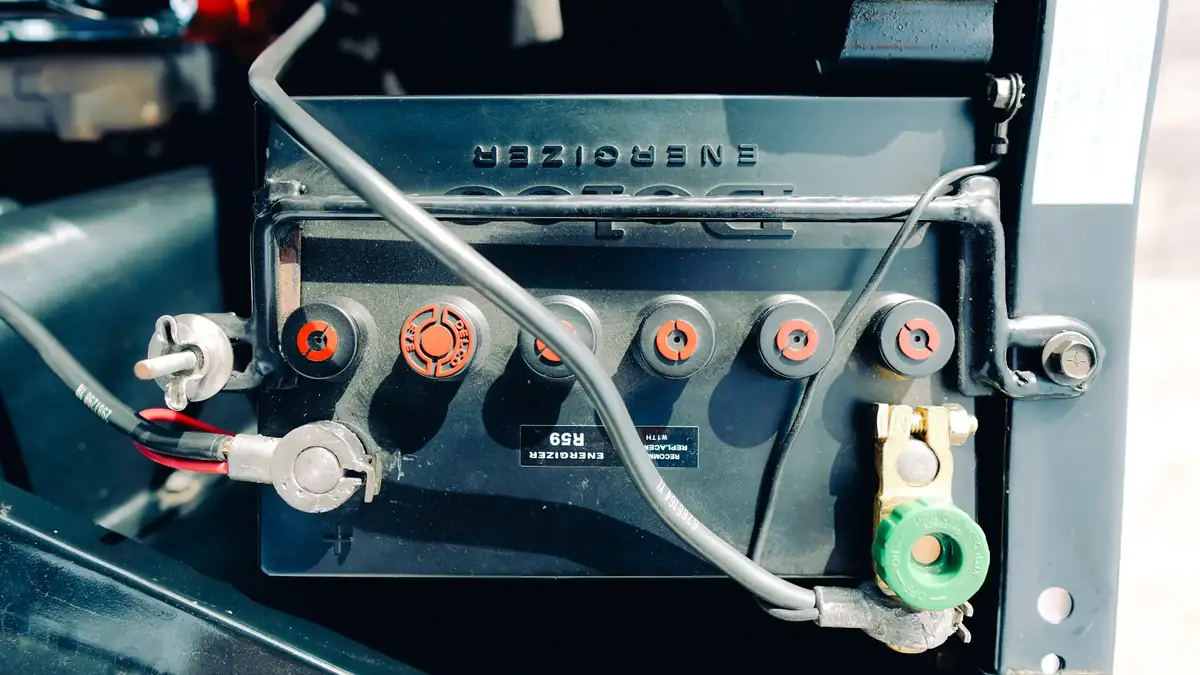
Car battery replacement in Logan starts with a test, not a new battery. We load-test the battery and check what the charging system is putting back in, because a battery that tests weak is sometimes just the symptom. If it does need replacing, we fit the right type for the car: flooded, EFB or AGM for start-stop models.
New batteries die early when something else is wrong, usually a charging fault or a drain that runs while the car is parked. Heat makes it worse, since temperatures over 30°C can speed up a battery's internal chemical reactions and shorten its life. Need a car battery in Logan? If you searched for a car battery near me, call 07 3566 2108 or use the quote form on this page to book the vehicle in at our Logan-based workshop, close to Slacks Creek and Springwood.
Car battery work we do in the workshop
Every battery job starts with testing. Once we know what the battery and the rest of the system are doing, we replace only what needs replacing and fit the right battery for the car.
Battery testing and health checks
A multimeter reading only tells you the state of charge. State of health is a different question, and it is what decides whether the car starts. That is why a battery can show 12.6 V on the meter and still fail the moment the starter pulls on it. We use a conductance or load test to see how the battery performs under demand, then give you a straight answer on whether it is worth keeping.
Start-stop, EFB and AGM batteries
Cars with start-stop restart the engine many times a trip, and a standard flooded battery is not built for that duty. They need an EFB or AGM battery. Many newer cars also need the new battery registered with the vehicle, so the charging system knows what it is charging. Smart alternators vary their output to suit the battery, and skipping registration can shorten a new battery's life. We check what your car was built with, fit the matching type and complete the registration step, so the system and the battery work together from the first start.
Flat battery and drain checks
Sometimes a new battery is not the fix. If the car goes flat overnight or after a few days parked, something may be drawing power with the ignition off. We run a parasitic draw test, then pull circuits one at a time until the draw drops. Replacing the battery without finding the drain only gets you a second flat battery, so we find the cause first and tell you what we found before any parts are fitted.
Terminals, clamps and earth straps
A dead-looking battery is sometimes a poor connection. Corroded terminals, a loose clamp or a tired earth strap can cut cranking current and mimic a failed battery. We check and clean the connections as part of the test, and replace damaged clamps or earth straps where they are the real problem. If the battery tests fine once the connections are sound, you keep it and avoid paying for a replacement you did not need. It is a short check that regularly saves a battery.
How we test and replace a car battery
The order matters. We test, confirm the fault, fit the new battery, then reset and retest so the job is finished properly.
- 1
Test the battery and charging
We load-test the battery for health, then measure the alternator's output with the engine running. That tells us whether the battery has failed on its own or the charging system let it down. If the charging side is weak, we tell you before any battery goes in.
- 2
Match the right battery
Once the test says replace, we match the battery to the car. That means the right physical size and terminal layout, enough cold cranking amps (CCA) for the engine, and the correct type for the car's electrical demands, from flooded through to AGM.
- 3
Fit it with memory kept
Where the car needs it, we use a memory saver so radio, window and body-control settings are not lost during the swap. We remove the old battery, clean the terminals and clamps, fit the new battery and protect the connections against corrosion.
- 4
Register and retest
Cars that need battery registration get it done with a scan tool, so the charging system treats the new battery correctly. Then we retest the charging with the engine running and confirm the car starts cleanly before it goes back to you.
Book the vehicle in and we'll test it and price the repair before any work starts.
Choosing a replacement battery
The choice comes down to a few trade-offs. We go through them with you and start from the specification the car needs, not a brand name.
Flooded, EFB or AGM
A conventional flooded battery suits many older cars without start-stop. EFB (enhanced flooded battery) is built for the repeated restarts of basic start-stop systems. AGM (absorbent glass mat) handles deeper cycling and heavier electrical loads, and is the usual fit for cars that came with AGM from the factory. Going down a type in a start-stop car is false economy, because the battery can wear out quickly under the restart cycle. We fit the type the car was designed around, or better.
Same size or more capacity
Matching the original size and CCA is the safe default, but some cars carry extra accessories that use more reserve capacity, such as a fridge, a winch or added lighting. In those cases a larger battery can help, as long as it physically fits and the charging system can support it. If you regularly run gear when the engine is off, a separate dual battery installation keeps the start battery protected. We will tell you which suits your use.
Why a Logan car battery struggles in Queensland heat
Heat is hard on batteries. NRMA advice is that temperatures over 30°C can speed up a battery's internal chemical reactions, break down the plates, corrode components and shorten its life. A Logan summer, with cars parked in full sun, is exactly that kind of heat.
Driving habits count too. Short suburban trips don't give the alternator long to refill what the starter used. The Pacific Motorway runs through Springwood and Loganholme on its way to the Gold Coast, and stop-start M1 commuting adds idling without much charging. A battery that never gets fully topped up wears faster, and a weak one shows up first on the hottest mornings.
What a battery job includes
A battery swap is more than lifting one out and dropping another in. Here is what goes with the job.
Charging system checked too
We check the alternator's output as part of the job, so a weak charging system does not flatten the new battery. If the output is low or unstable, you will know before you leave, and any repair is quoted separately. Fitting a good battery to a faulty charging system only repeats the problem.
Old battery sent for recycling
Lead-acid batteries are recyclable, and they should not go in the bin. We take the old battery out and send it for recycling, so you do not have to deal with it. It is a simple part of the job that keeps lead and acid out of landfill. Most of the lead is recovered for reuse.
Settings and resets handled
Disconnecting power can wipe settings. Where the car needs it, we deal with radio codes, one-touch windows and start-stop system resets after the new battery is in. We confirm everything works before the vehicle is handed back, so you are not left re-entering codes in the driveway. Cars differ in what they lose and what they need to relearn, and we work through the checks that suit yours.
What affects the cost of car battery replacement in Logan?
The price depends on the battery the car needs and how much work it takes to fit. As a guide, a car battery supplied and fitted typically costs from about A$150 to A$400 in Australia (ServiceTasker, Feb 2026), with start-stop EFB and AGM batteries towards the top of that range. The car decides where yours sits, so the final quote is given on inspection. Send the details through the form beside this section for a free written quote.
Flooded, EFB or AGM
The chemistry the car needs is the biggest factor. EFB and AGM batteries cost more to build than flooded ones, and start-stop cars need them. We fit the type your car requires.
Size and capacity
Battery group size and CCA rating both change the price. A larger engine or a higher accessory load usually calls for a bigger battery, which costs more.
Where the battery sits
A battery under the bonnet is quick to reach. One under a seat or in the boot takes longer to access and swap, and that time is part of the job.
Registration or coding
Some cars need a scan tool after fitting to register the new battery. That extra step takes time and equipment, so it is part of the quote for those vehicles.
Car battery FAQs for Logan drivers
What kills a car battery the most?
Heat, short trips, parasitic draw and undercharging are what kill a car battery most often. NRMA advice is that temperatures over 30°C can speed up the chemical reactions inside a battery and shorten its life. Short trips and a hidden drain leave the battery undercharged, which wears it faster still.
How do I tell if my car needs a new battery?
You can tell your car needs a new battery when it cranks slowly, the battery light comes on or it fails a load test. Age adds to the picture, and a battery that is several years old deserves a test. A load test gives the answer, so we test before we replace.
Do car batteries give warning before dying?
Car batteries sometimes give warning before dying, but not always. A slow crank or dim lights can come first. Heat-related failures can be sudden, with a car that started fine yesterday refusing to turn over today. A regular test catches weak batteries before they leave you stuck.
How many years should a car battery last?
RACQ puts the average car battery's life at about 38 to 48 months, roughly three to four years, though it depends on the battery, the car and how it is used. Heat shortens it, since temperatures over 30°C can speed up the internal chemical reactions. Short trips and a drain also cut life, which is why we test rather than guess from age.
Can a dead car battery be recharged?
A dead car battery can often be recharged, provided it is not sulphated or damaged inside. Once it is charged, we load-test it to see whether it holds up under a real starting load. If it fails the test, charging only delays the replacement.
How long can a car sit before the battery goes flat?
How long a car can sit before the battery goes flat depends on the standby draw and the battery's condition. Modern cars always draw a little power, and an alarm, a dash cam or other accessories add to it. A weak battery in a long-parked car can go flat quickly, and a drain test will show whether something is pulling too much.
Which car battery brand is best?
No single brand is best for every car, because the right battery depends on the specification. The correct type, size and CCA for your vehicle matter more than the badge on the case. We start from what the car needs, then fit a battery that meets or exceeds it.