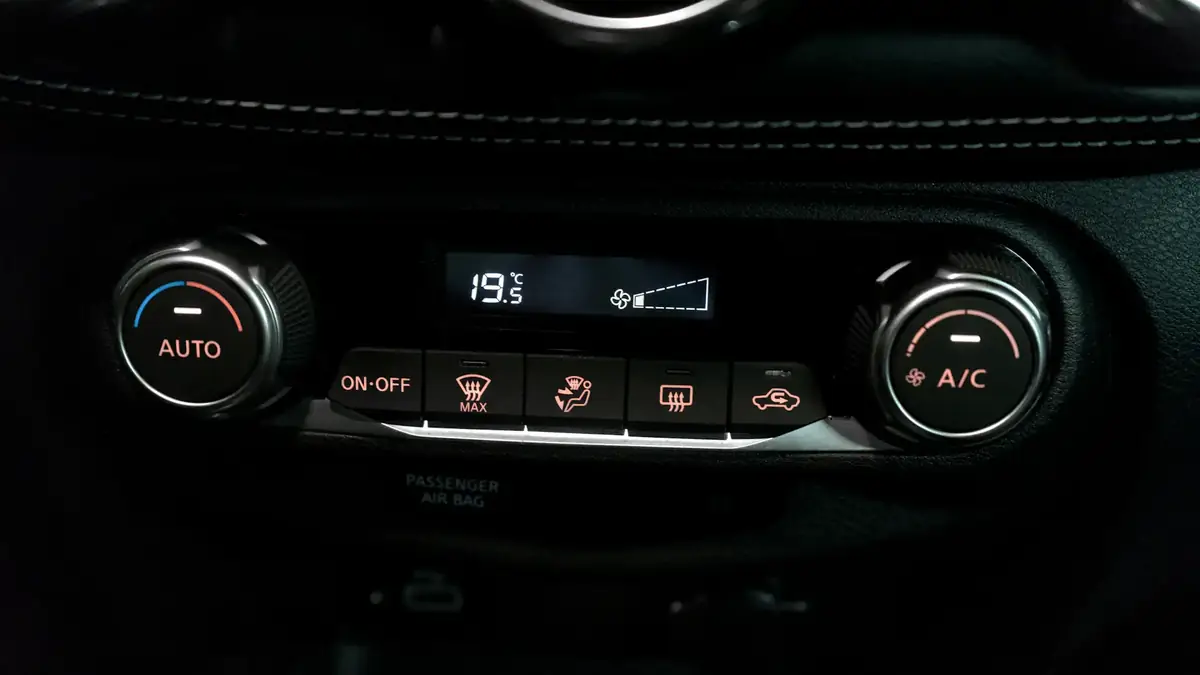
Plenty of cars that seem to need a regas actually have an electrical fault. The compressor clutch coil, a condenser fan, a relay, a pressure switch or the climate controls can all stop the cold air, so we test those first. Topping up a system with a dead fan relay only hides the problem for a week. If you searched for car aircon regas near me or auto air conditioning near me, we are a Logan-based workshop close to Slacks Creek and Springwood.
When the system really is low, we leak test it before any gas goes in. Refrigerant work is covered by the national ARC licensing rule for cars and utes. For car air conditioning repair in Logan, call 07 3566 2108 or use the quote form on this page to book the vehicle in.
Car aircon faults we diagnose and repair
A warm-blowing system is often an electrical fault or a slow leak, not just "low gas". These are the common faults, and the tests we use to tell them apart.
Compressor clutch not engaging
The compressor only pumps when its clutch locks onto the pulley. We check the clutch coil resistance and the air gap, then the clutch relay and fuse feeding it. A clutch that never pulls in looks exactly like a car that is low on gas, so gauges alone can mislead. We also check the wiring for voltage drop, because a weak supply stops the coil from pulling in. Fixing the cause first avoids replacing a good compressor.
Condenser and radiator fans
The fans pull air across the condenser when the car is stopped or crawling. We test the fan motors, resistors and fan relays. If a fan stops, system pressure climbs and the high-pressure cut-out shuts the compressor off. That is common in stop-start M1 traffic, where the aircon works on the highway and quits at the lights. We also look for a blocked condenser, since bugs and road grit choke airflow the same way a dead fan does, and we test both fans on high and low speed.
Pressure switches and sensors
Low and high pressure switches protect the compressor, and the evaporator temperature sensor stops the core from icing up. Each one reports to the ECU, which decides whether the compressor runs. We read what they report, check the plugs and wiring back to the module, and test the switch itself. A faulty switch can cut the compressor off while the gas level is perfectly fine, which is why a regas does not always fix a car that will not cool.
Blower motors and climate controls
A weak or silent blower usually points to the blower motor or its resistor. Warm air on one side only often means a blend-door actuator that has stopped moving. We also test the control panel and its wiring, because a dead button or a failed module can mimic a cooling fault. On cars with automatic climate control, we scan the module for stored faults so the actuators and sensors can be checked against what the car reports.
Leak testing and regas
We leak check the system before any gas goes in, because a leak simply empties the new charge. Dye or an electronic detector shows where the refrigerant is escaping. The gas is R134a or R1234yf depending on the vehicle. Refrigerant work is only done under an ARC licence, which is the national rule. Once the leak is fixed, we pull a vacuum, charge to spec and check that the pressures hold steady. There is no fixed regas interval, such as every two years: a system in good order loses gas only slowly, so a car that needs regassing often has a leak worth finding.
How our car aircon regas in Logan is done
The order matters. We clear the electrical side first, then deal with the refrigerant, so the new charge has a reason to stay in the system.
- 1
Test the electrical side
We check the fuses, relays, compressor clutch, both fans and the pressure switches, then read any stored codes. Many cooling faults end here, before any refrigerant is touched, which saves you paying for gas the car did not need. We start here every time.
- 2
Read pressures, find leaks
Gauges go on the service ports to read the system pressures on both sides. If the charge is low, we leak test before adding any gas, so we know where the refrigerant went and whether it will stay in this time.
- 3
Fix what caused it
We repair or replace the part at fault, whether that is an electrical part, a seal or a component. You get the quote before the work starts, and nothing is added without your say. Then the system is ready to be recharged.
- 4
Regas and check vent temperature
We recover the remaining refrigerant, pull a vacuum to remove air and moisture, then charge to the vehicle's specification. Finally we measure the vent temperature with you, so you can see the difference for yourself. We note the readings on the job card. A straightforward regas typically takes around 30 minutes to an hour; finding and fixing a leak adds to that.
Book the vehicle in and we'll test it and price the repair before any work starts.
Car aircon in Logan's summer heat
Summer heat and stop-start commuting on the Pacific Motorway, which runs through Springwood and Loganholme, keep a car's aircon working hard. Condenser fans, clutch coils and relays wear faster under that load, and they are the parts that fail first.
Logan's population is growing fast, which means more cars on local roads. It was an estimated 403,515 at 30 June 2025 and the second-fastest-growing council area in Queensland. Every extra hour in a hot cabin shows up weak spots in the aircon.
On the licensing side, a Refrigerant Handling Licence is a national requirement for working on car air conditioning. The Australian Refrigeration Council issues an Automotive Air Conditioning licence to people with qualifications such as AUR20220 Certificate II in Automotive Air Conditioning Technology. That is how the industry works, and it is why refrigerant jobs are never a casual add-on.
What you get when we work on your aircon
Here is how we handle the refrigerant side, and what you can expect to see at handover.
Gas recovered, never vented
Refrigerant is recovered from the system with proper recovery equipment before any work starts. We do not let it escape into the air, and we measure what comes out before we charge the system again. That keeps the charge accurate and the job clean, and it tells us how much the system had lost.
The right gas for your car
The under-bonnet label tells us whether your car takes R134a or R1234yf. We charge with the one it calls for and never mix the two. Putting the wrong gas in can upset the system and the pressure readings, and each gas needs its own gear and fittings. We confirm it before connecting anything.
Vent temperature checked with you
We take a vent temperature reading before the work and another once it is finished. At handover we show you both, so you can see what changed rather than take our word for it. If it is still not cold enough, we say so and look further. That keeps the result honest.
What affects the cost of a car aircon regas in Logan?
The price depends on what is actually wrong. An electrical fix, a leak repair and a straight regas are three different jobs. We give you a free written quote after diagnosis, and the form beside this page is the quickest way to start one.
Electrical fault or lost gas
A faulty relay or fan is a small repair. A leak means finding the source, fixing it and then regassing. We tell you which one you have before any work starts.
R134a or R1234yf
Newer R1234yf gas costs more to buy than R134a. The label under the bonnet decides which your car needs, and it changes the quote.
Where the faulty part sits
A part in plain view under the bonnet is quicker to reach. One behind the dash or deep in the engine bay takes longer to get out and refit, and that labour goes into the quote.
Parts availability
Common relays and fan motors are easy to source. Some compressors and sensors take longer to get, and that can affect how long the car stays with us.
Car aircon regas FAQs for Logan drivers
Why is my car air con blowing warm air?
Your car air con blows warm air when the system has lost gas to a leak or something electrical has stopped it working. The usual causes are a compressor clutch that will not engage, a dead condenser fan, a faulty pressure switch or a stuck blend door. We test each of these before recommending a regas.
Why is my AC running but not cooling in my car?
Your AC can run without cooling when the blower works but the compressor is not pumping. The clutch may not be engaging, the condenser fan may not be spinning, or the system may be low on gas. A quick check of the clutch and fans usually points to which one.
Why is my car AC not cold on hot days?
Your car AC is not cold on hot days when airflow across the condenser is poor or the gas charge is only just enough. Heat and slow traffic expose a weak fan or a marginal charge that seemed fine in cooler weather. That is why the fault often shows up in summer.
How do I tell if my car AC needs regassing?
You can tell a car AC needs regassing when the cooling slowly gets weaker over weeks or the compressor clutch keeps cycling on and off. A pressure test confirms it. If the gas has gone, there is a leak, so we find and fix that before any new gas goes in.
Who can regas a car air conditioner?
Only someone who holds a Refrigerant Handling Licence from the Australian Refrigeration Council can regas a car air conditioner. This is a national rule. Ask whoever does the work to confirm they hold it before the car goes on the hoist.
Can I refill AC gas myself?
You should not refill car AC gas yourself, because working on car air conditioning refrigerant needs an ARC licence. DIY cans can overcharge the system or contaminate it, which makes a small fault into an expensive one. Leave the refrigerant to a licensed technician.
What is black death in car AC?
Black death in car AC is the name for a failed compressor that sends metal debris and black sludge through the whole system. It usually means flushing the system and replacing several parts. That is why early signs, like a noisy clutch or odd pressures, are worth checking before they get that far.